First Aid
and CPR
A course for every coach and teacher, and for anyone who wants to be ready: you learn what to do, in order and calmly, when someone suddenly collapses, a child chokes, someone is bleeding, an ankle twists, a player takes a blow to the head or the heat gets dangerous; you resuscitate adults, children and infants, use the defibrillator, and write an emergency plan for your workplace.
This course is taught in Arabic: the videos, the texts and the quizzes are in Arabic.
14 units in 4 modules19 hours (approx.)180 quiz questions$59 · 221 SAR PriceCertificate with a verification number
The four modules and the fourteen units
Every unit has a video, the full text with tables, diagrams and pictures, a ready-to-use practical tool, a case study to discuss, a worksheet and a ten-question quiz. Throughout the course we follow Salman, the emergency lead at Al-Shorouk Club; Reema, a physical education teacher; Abu Ali, the member who collapsed on the treadmill; and Hassan, a football player.
Module 1: Foundations and assessment
- 57 min · free
First aid: the role, safety and consent
What first aid is and why coaches and teachers need it, the most important message of the course, protecting yourself from danger and infection, consent and respect for the casualty, and staying calm under pressure.
- 62 min
Assessing the scene and the casualty, and calling for help
The order of action — danger, then breathing, then bleeding, then shock — checking response and breathing in ten seconds, calling emergency services on speaker, and what to tell the call handler.
Module 2: Resuscitation and saving life
- 56 min
Sudden cardiac arrest and the chain of survival
What happens in cardiac arrest, its signs, agonal breathing and brief seizures, the links of the chain of survival, why every minute counts, and cardiac arrest in sport.
- 72 min
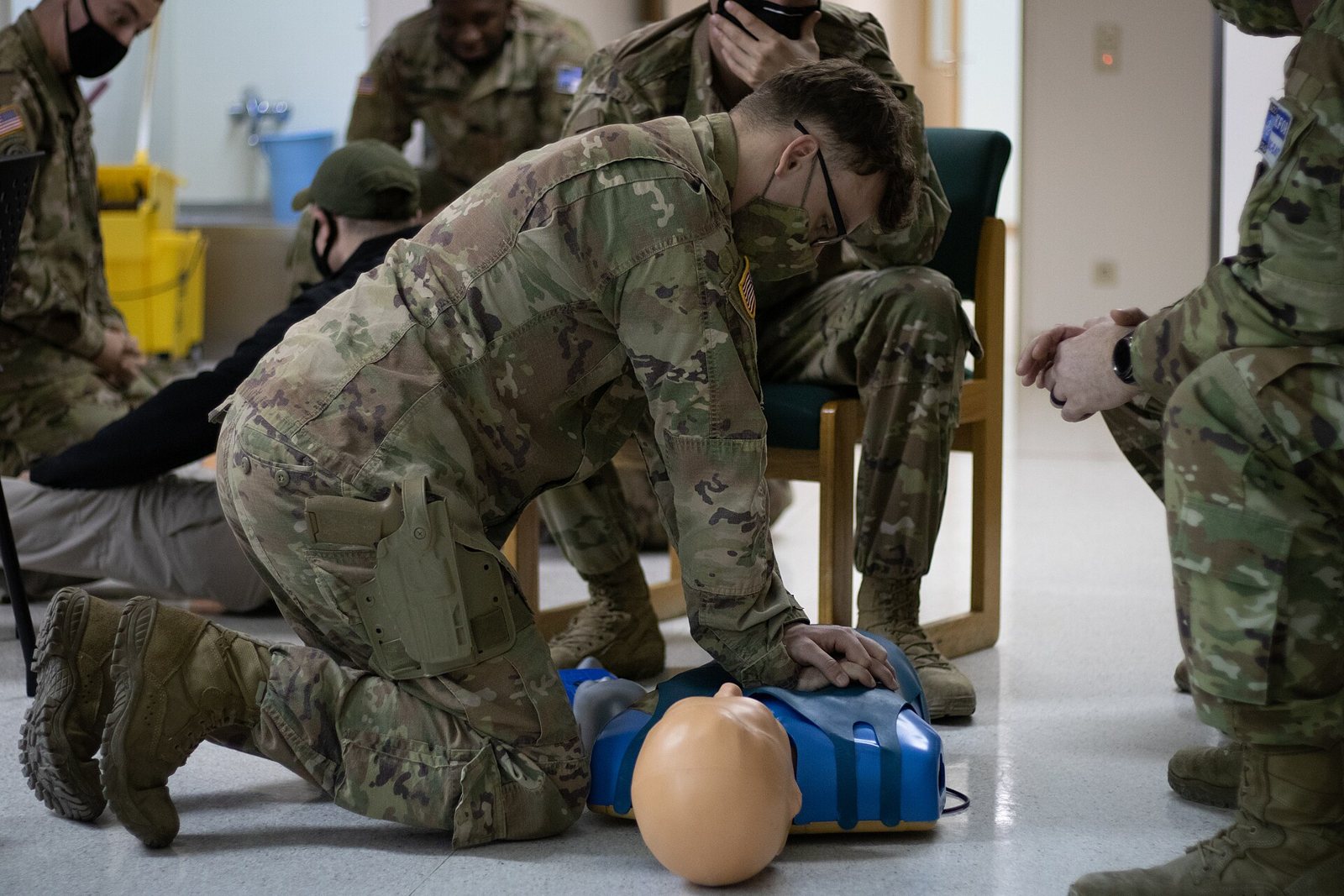
Adult CPR
Hand position, depth, rate and chest recoil, 30 compressions and 2 breaths, compression-only CPR, swapping every two minutes, when to stop, and common mistakes.
- 56 min
The automated external defibrillator
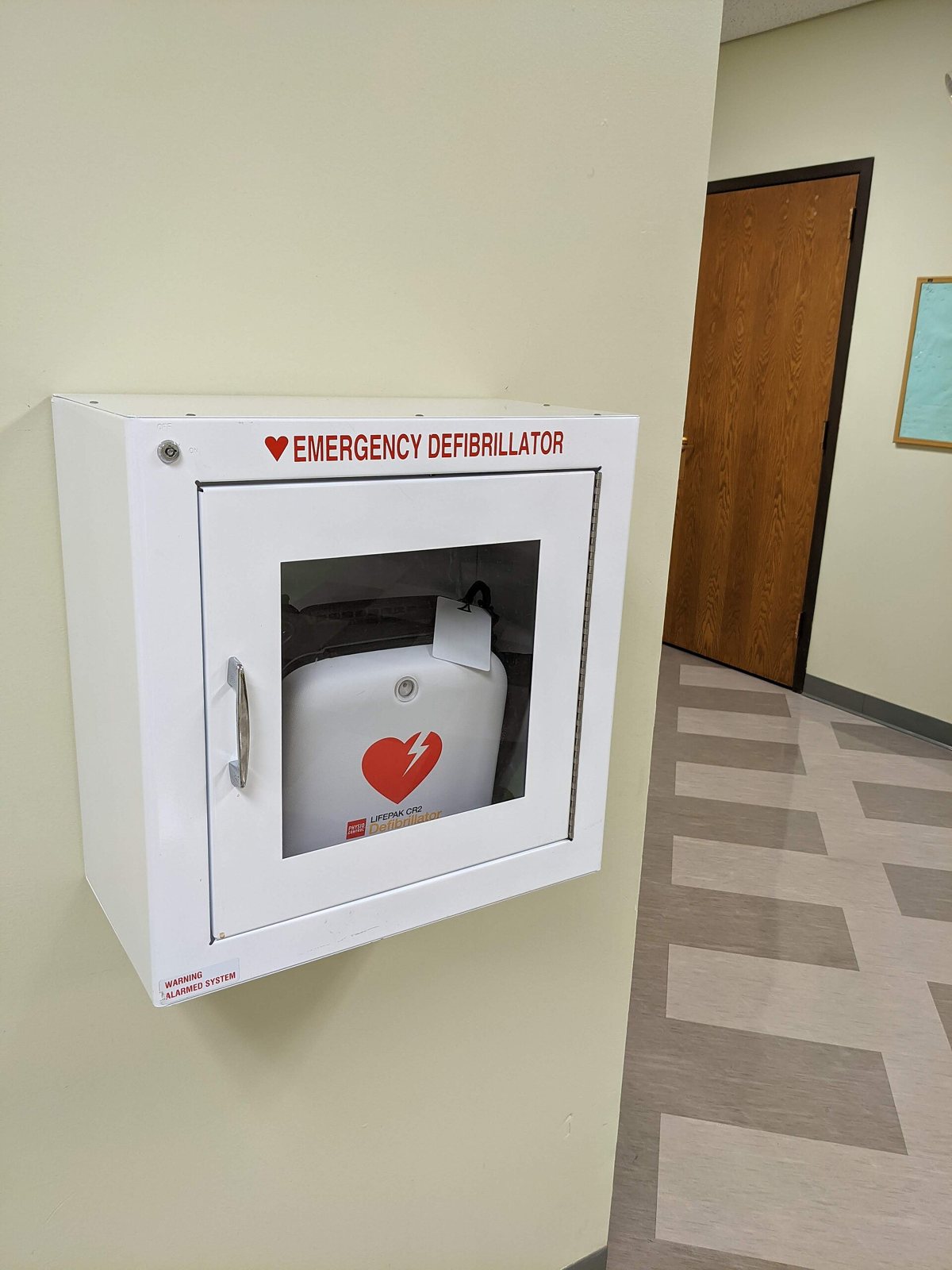
Why the shock, the steps from opening the device to the shock, placing the pads, special cases (water, hair, pacemakers and children), and where to find the device.
- 61 min
CPR for children and infants
Why children are different, the first five rescue breaths, compressions for infants and children, depth and ratio, when to call, the defibrillator for children, and preventing accidents.
- 51 min
Choking and airway obstruction
Partial and complete obstruction, back blows and abdominal thrusts, pregnant and larger casualties, infant choking and chest thrusts, loss of consciousness while choking, and medical follow-up afterwards.
Module 3: Injuries, bleeding and the environment
- 57 min
Unconscious and breathing: the recovery position, fainting and shock
When and why to use the recovery position and its steps, fainting and what to do, shock, its signs and keeping the casualty warm, and monitoring breathing until the ambulance arrives.
- 62 min
Bleeding and wounds
Direct pressure and pressure bandages, the tourniquet for life-threatening bleeding, embedded objects, nosebleeds, cleaning small wounds, and preventing infection.
- 67 min
Sports injuries: sprains, fractures, dislocations and bruises
First response to sprains and bruises, closed and open fractures, dislocations, muscle and tendon tears, immobilisation, and when a player may return and when not.
- 61 min
Head, neck and back injuries
Concussion, its signs and the rule “if in doubt, sit them out”, red flags, spinal injury and when to move a casualty, and injuries to the face, teeth and eyes.
- 66 min
Burns, heat, cold and drowning
Cooling burns for twenty minutes, chemical and electrical burns, heat exhaustion, heatstroke and rapid cooling, hypothermia, drowning and safe rescue.
Module 4: Medical emergencies and the emergency plan
- 77 min
Medical emergencies: heart, stroke, asthma, diabetes, seizures and allergy
Chest pain and heart attack, stroke and the face-arm-speech test, asthma attacks, low blood sugar, seizures, severe allergy and the adrenaline pen, poisoning and stings.
- 72 min
The emergency plan for the club, the pitch and the school, and the graduation project
The parts of an emergency plan and the roles, the first aid kit, regular training, records, and emotional support for first aiders after an incident, then an explanation of the graduation project.
- 3 hours (approx.)
Graduation project
“An emergency and first aid plan for a club, a school or a pitch” in eight parts: the site and its risks, roles and communication, cardiac arrest and the defibrillator, choking, bleeding and injuries, medical emergencies, the kit, and training and records. Assessed by the smart tutor; the pass mark is 60.
- 60 min
Final exam
Forty questions from the four modules. Get twenty-eight right and your certificate is issued.
Who this course is for
- Sports coaches and fitness and swimming coaches.
- Physical education teachers and staff at schools and nurseries.
- Club and academy staff and the people responsible for emergencies there.
- Parents, and anyone who wants to be ready to save a life.
What you get
- 14 videos that explain each unit with pictures and diagrams.
- Cards ready to print: first steps, CPR, child CPR, choking, bleeding, pitch injuries, concussion and medical emergencies.
- An emergency plan for your workplace, and a first aid kit checklist.
- A smart tutor that answers from the unit’s text.
- A theoretical certificate of completion with a verification number, and hands-on practice on a CPR manikin with a certified instructor is recommended.
Your certificate when you pass
Pass the graduation project and the final exam, and your certificate is issued at once in your name, ready to print or save as a PDF.
- A certificate of completion in English in A4 size.
- A verification number of its own, and a QR code that opens the verification page on eiast.se.
- Your study hours, your graduation project mark and your final exam result.
- It stays valid and any organisation can verify it at any time. It is a theoretical certificate of completion from the academy and does not replace hands-on training with a certified instructor.
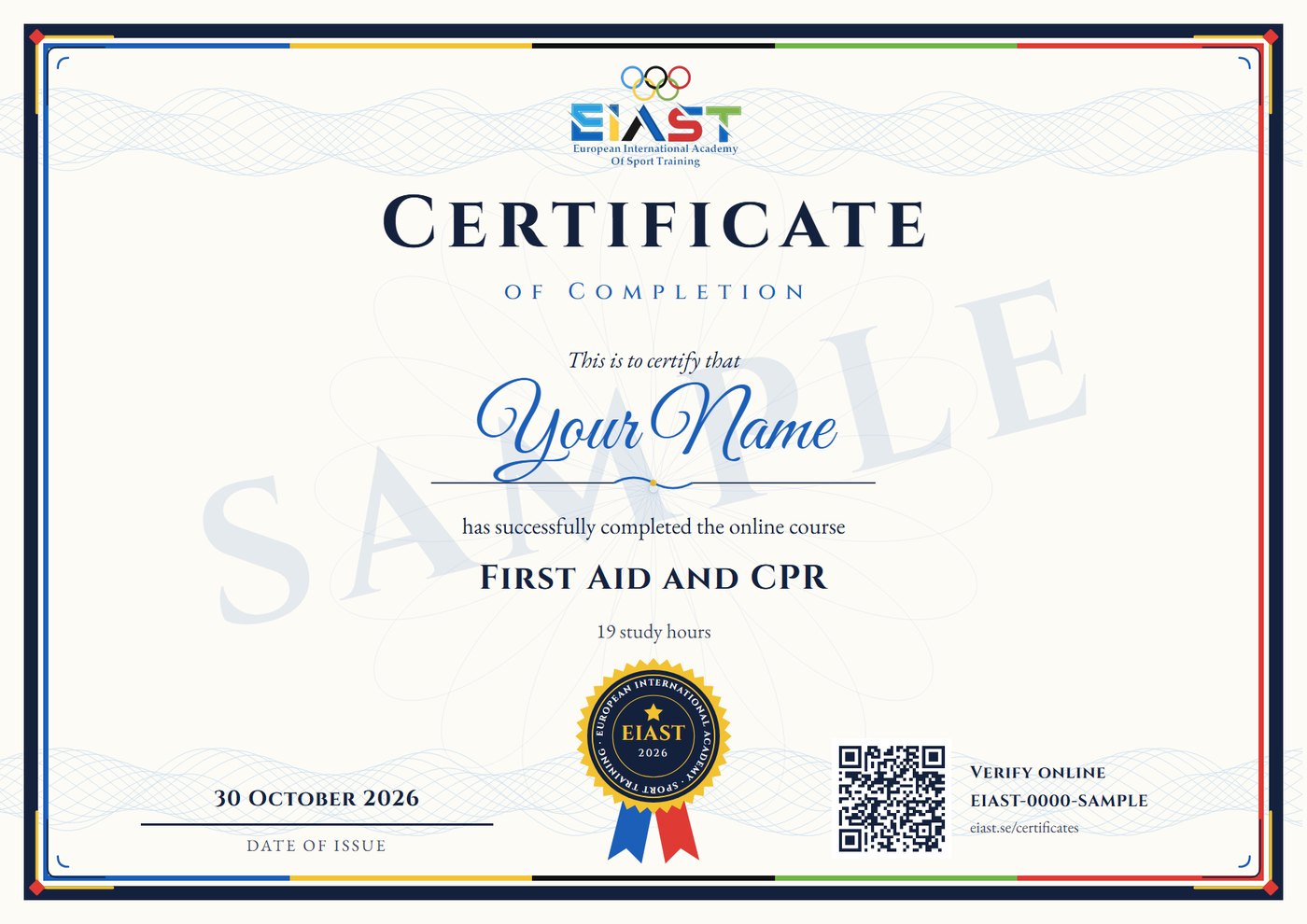 View the sample at full size
Start the course today
Buy the course once and unit one opens. Each unit opens the next, then the graduation project and the final exam, and your certificate is issued as soon as you pass.