Professional Diploma in Bodybuilding, Fitness Training and Health Club Management
Three competences in one diploma: the science of the body and training, the skill of technique and of working with people in the gym, and running the gym itself. You screen and assess your client, design a strength and hypertrophy programme with the right doses, teach technique safely, guide nutrition within the limits of your role, then set up or run a gym by the numbers: prices and costs, the break-even point, the team, keeping members, and marketing.
This course is taught in Arabic: the videos, the texts and the quizzes are in Arabic.
30 units in 6 modules44 hours (approx.)360 quiz questions$249 · 934 SAR PriceDiploma with a verification number
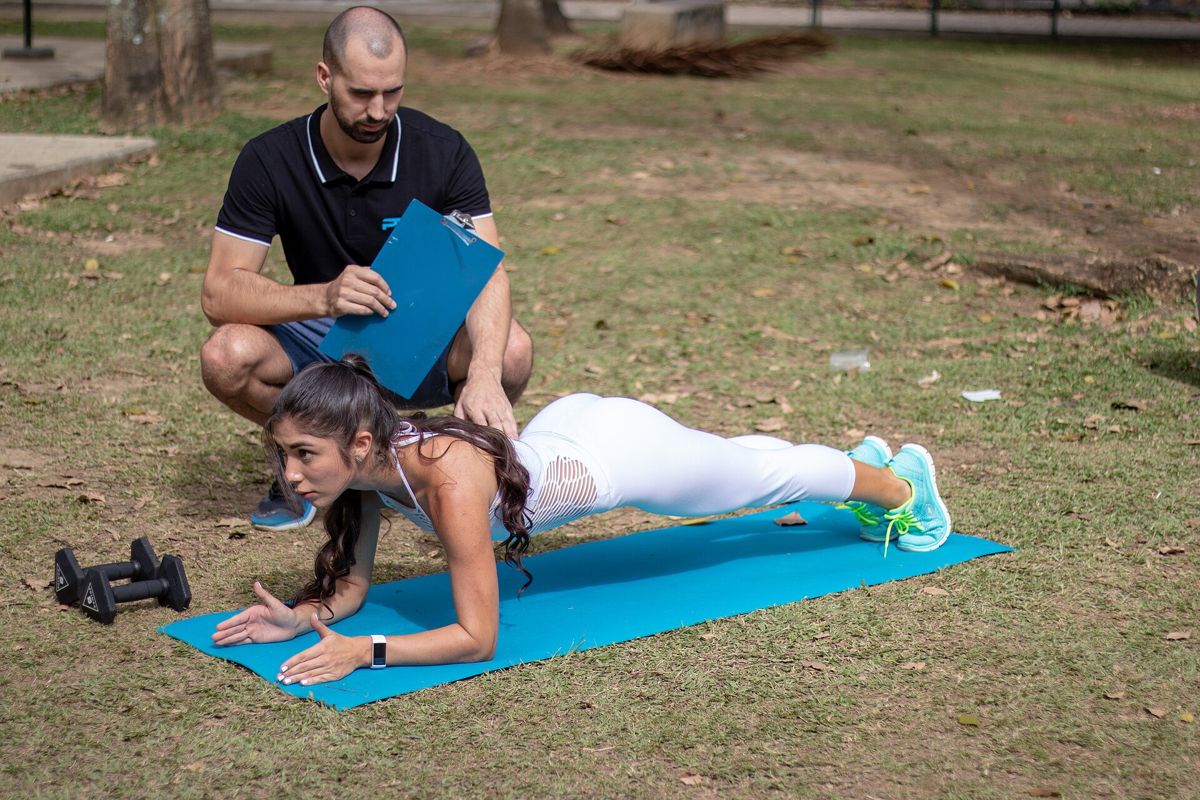
The six modules and the thirty units
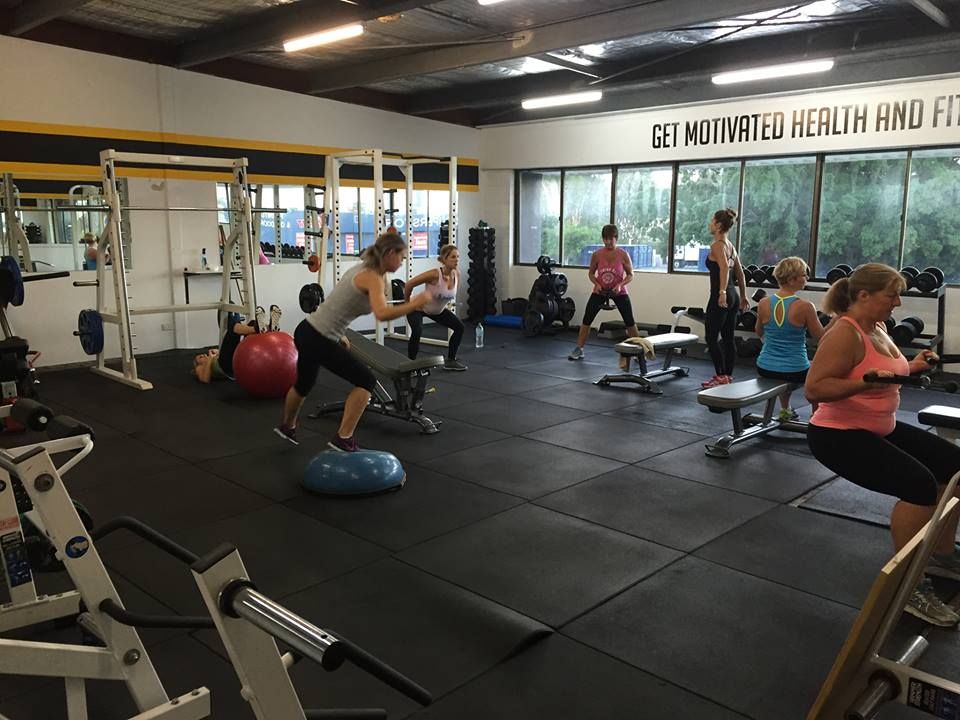
Every unit has a video, the full text with tables, pictures and diagrams, a ready-to-use practical tool, a case study to discuss, a worksheet and a ten-question quiz. Throughout the diploma we follow Ziad, a young coach, and his two clients: Ahmed, a beginner, and Sara, who wants to lose fat and strengthen her back; then Al-Waha Health Club in the management module. The content draws on the lectures of Swedish coach Fredrik Björs, Captain Haider Sabah’s practical lessons on gym equipment, and current sports science references.
Module 1: The profession, the client and assessment
- 61 min · free
The gym coach’s profession: roles, ethics and the limits of responsibility
Who the gym coach and the personal trainer are, what sets a professional apart, professional ethics, the boundaries between the coach, the doctor and the dietitian, and your path in the profession.
- 71 min
The new client: welcome, health screening and goals
The first meeting, the physical activity readiness questionnaire and when to refer to a doctor, understanding the client’s motives, and turning “I want to get bigger” into a SMART goal.
- 77 min
Fitness and body composition tests
Body measurements, body fat percentage and waist circumference, tests of strength, muscular and cardiovascular endurance and flexibility, and how to choose a safe test, record the results and follow them up.
Module 2: The human body
- 72 min
Functional anatomy (1): bones, joints and the language of movement
The skeleton and its functions, the spine, types of joints, planes and axes, and the movement terms every professional coach uses.
- 82 min
Functional anatomy (2): the major muscles, their functions and their exercises
The muscles of the chest, back, shoulders, arms, trunk and legs: where each muscle is, what it does and its key exercises, and agonist, antagonist and stabiliser muscles.
- 77 min
Muscle physiology and hypertrophy
How a muscle contracts, fibre types, neural adaptation, and the mechanisms of hypertrophy: mechanical tension, volume and proximity to failure, and what the research says without exaggeration.
- 71 min
The heart, the lungs and the energy systems
The heart, circulation and the respiratory system, heart rate and how to calculate it, the three energy systems, and which one works in a heavy set and in cardio.
- 67 min
Hormones, recovery and adaptation to training
The hormones that matter for trainees, sleep and stress, the stress-recovery principle, the signs of overtraining, and why recovery, not training alone, builds muscle.
Module 3: Training science and programme design
- 72 min
Training principles and programme variables
Progressive overload, specificity, individual differences and reversibility, and the programme variables: exercises and their order, load, volume, rest, tempo and weekly frequency.
- 82 min
Strength and hypertrophy programmes: volume, intensity and proximity to failure
One-rep max and estimating it, load, reps and rest for each goal, weekly volume per muscle, reps in reserve and perceived exertion, and progressing the weight safely.
- 76 min
Splitting the week and bodybuilding systems
Full body, upper and lower, push, pull and legs, one muscle per day, when each one fits, and advanced techniques: supersets, drop sets and compound sets.
- 71 min
Periodisation, plateaus and overtraining
Why the programme changes, linear, undulating and block periodisation, the deload week, dealing with plateaus, and preventing overtraining.
- 72 min
Cardio, endurance and fat loss
Heart-rate zones and perceived exertion, steady-state and interval cardio, fat loss between training and nutrition, and combining cardio and resistance training without losing muscle.
- 62 min
Flexibility, warm-up and cool-down
Flexibility, range of motion and types of stretching, a general and a specific warm-up before training, warm-up sets before heavy weights, and the cool-down after the session.
Module 4: Technique and training in the gym
- 72 min
Applied biomechanics: machines and free weights
Levers, torque and the resistance curve, why an exercise is hard at one point and easy at another, machines versus free weights and cables, and choosing the right exercise.
- 82 min
Lower-body exercise technique
The squat, the deadlift, the lunge, the hip thrust and leg machines: set-up and execution, coaching points, common mistakes, and easier and harder alternatives.
- 82 min
Chest, back and shoulder exercise technique
The bench press and its variations, pull-downs and rows, the overhead press and raises, protecting the shoulder, and machines and cables.
- 67 min
Arm and trunk exercise technique
Biceps, triceps and forearm exercises, trunk exercises from stability to movement, and the mistakes that steal effort from the muscle.
- 72 min
Working with beginners and correcting mistakes
A beginner’s first month, verbal, visual and tactile cues, correcting one mistake at a time, progressing from easier to harder, and motivating beginners so they don’t quit.
- 77 min
Gym safety and injury prevention
Causes of injuries in the gym, spotting, safety around machines, common injuries and training around pain, first response in emergencies and when to refer.
Module 5: Nutrition and special populations
- 82 min
Nutrition for muscle gain and fat loss
Energy and calories, protein, carbohydrates and fat, meal timing, a calorie surplus for hypertrophy and a deficit for fat loss, and the limits of the coach’s role in nutrition.
- 77 min
The meal plan and contest preparation
Turning the numbers into a real day of food, foods of the Arab region, Ramadan, the stages of bodybuilding contest preparation and cutting safely, and when to refer to a dietitian.
- 72 min
Supplements and doping: the science, the risks and the ethics
Which supplements the evidence supports and which it does not, doping agents and hormones and their health and legal risks, the coach’s ethical position, and doping control.
- 77 min
Special populations: women, older adults, teenagers, obesity and chronic disease
Training women and pregnancy, older adults and frailty, teenagers, obesity, diabetes, high blood pressure and back pain: what to adjust, what to avoid and when to refer.
Module 6: Health club management
- 82 min
Setting up a gym: the idea, the location, the design and the equipment
Market research and the target client, gym models, location and space, zoning, choosing and buying equipment, and licences and safety.
- 82 min
Memberships, prices, revenue and costs
Types of membership, pricing the gym and personal training, revenue streams, fixed and variable costs, the break-even point, and monthly cash flow.
- 67 min
The team: choosing, hiring and developing coaches and staff
The gym’s organisation chart, job descriptions, choosing coaches against criteria, coach pay models, continuing training, appraisal, and the culture inside the gym.
- 72 min
Customer service and keeping members
Why members leave, the member journey from the first visit, the first ninety days, handling complaints, and measuring retention and customer satisfaction.
- 72 min
Online marketing for the gym and the coach
Identity and message, social media and content, paid ads, Google Maps and reviews, success stories told ethically, and measuring the return on marketing.
- 77 min
Daily operations, quality and the graduation project
A day running the gym, cleaning and maintenance, performance indicators, rules, contracts and legal safety, then bringing what you learned together in the graduation project: a complete training programme and a gym management plan.
- 5 hours (approx.)
Graduation project
A two-part professional project with twelve sections: a complete twelve-week training programme for a client, from screening and assessment to technique, nutrition and follow-up, and a management plan for a gym by the numbers: equipment, prices, the break-even point, the team, retention, marketing and operations. Assessed by the smart tutor; the pass mark is 60.
- 90 min
Final exam
Sixty questions, ten of them on two practical cases: a client in the gym, and a gym’s numbers. Get forty-two right and your diploma is issued.
A coach who understands the body, masters the gym and runs the business
Many coaches know the exercises but not why, and many gyms close because their owners never did the numbers. This diploma brings the three together in practical language, with examples from gyms in the Arab world.
- The science: Functional anatomy, the physiology of hypertrophy, the heart and energy systems, hormones and recovery, without myths.
- Programming: Volume, intensity and proximity to failure, splitting the week, periodisation and breaking plateaus, and cardio and fat loss.
- The gym: Technique for the squat, the deadlift, presses and pulls, correcting beginners’ mistakes, safety and first aid, and nutrition, supplements and special populations.
- Management: Market research and equipment, memberships and the break-even point, the team, the member journey, online marketing, and the KPI dashboard.

Who this diploma is for
- Gym coaches and personal trainers who want a solid scientific and professional foundation.
- Bodybuilding and fitness athletes moving into a coaching career.
- Gym and health club managers and anyone planning to open a gym.
- Physical education graduates who want to work in the fitness sector.
What you get
- 30 videos that explain each unit with examples and diagrams.
- 30 A ready-to-use practical tool: the client file, the assessment battery, the dosage table, technique cards, the needs calculator, the monthly numbers sheet, the member journey, the KPI dashboard and more.
- A PDF trainee guide, and a smart tutor that answers from the text of the unit you are studying.
- A two-part graduation project assessed by the smart tutor against published criteria.
- A diploma document with a verification number, issued when you pass the project and the final exam.
Your diploma when you pass
Pass the graduation project and the final exam, and your diploma is issued at once in your name, ready to print or save as a PDF.
- A Diploma document in English, in A4 size.
- A verification number of its own, and a QR code that opens the verification page on eiast.se.
- Your study hours, your graduation project mark and your final exam result.
- It stays valid and any organisation can verify it at any time. It is a diploma from the academy, not a university degree or a professional licence from a government body.
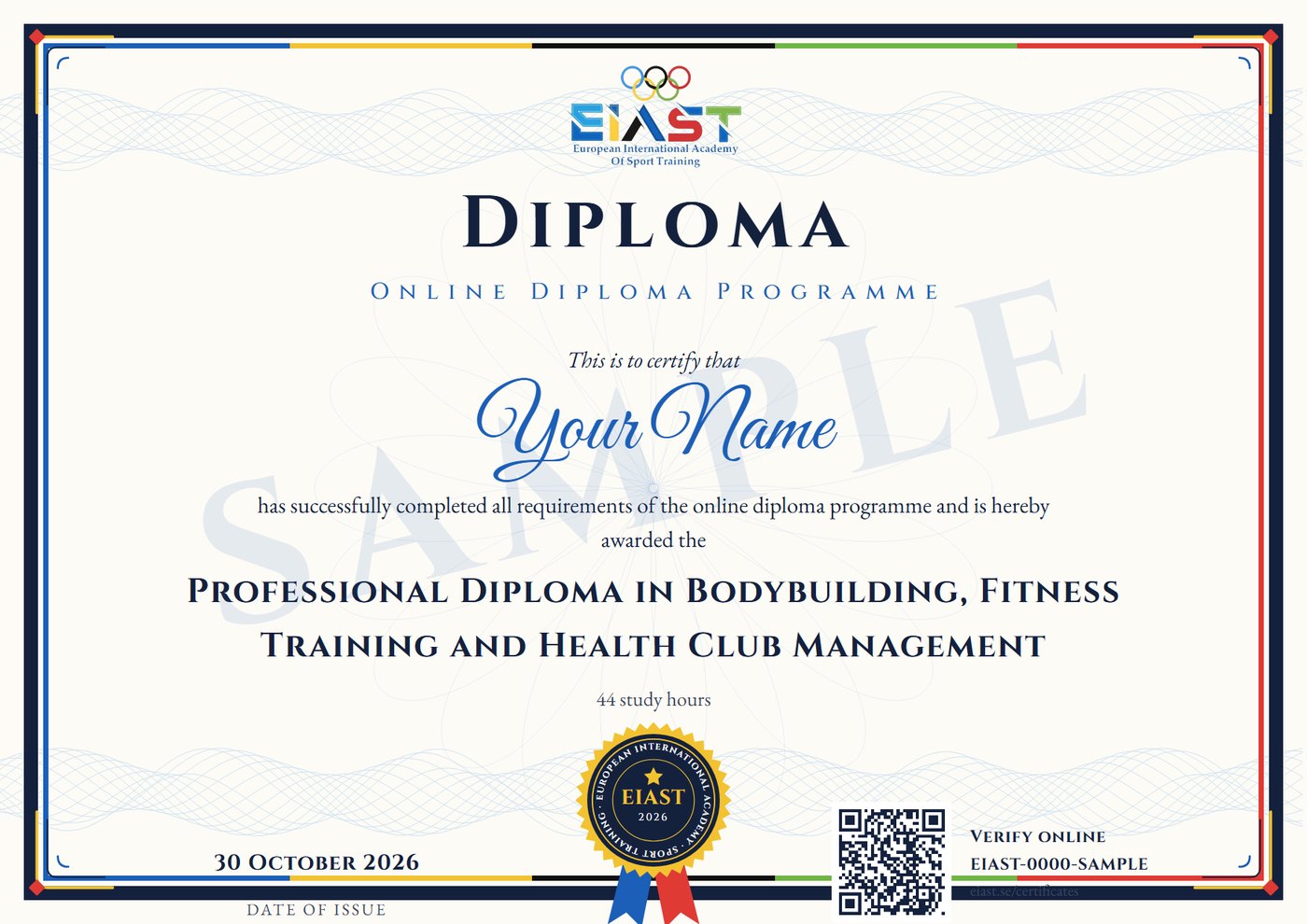 View the sample at full size
Start the course today
Buy the course once and unit one opens. Each unit opens the next, then the graduation project and the final exam, and your diploma is issued as soon as you pass.