Professional Diploma in Physical Education Teaching
for International Schools (European Curriculum)
A diploma for physical education teachers at international schools in the Arab region: you understand the European curriculum and the IB, British and Cambridge curricula, plan units with measurable objectives, teach with varied styles that keep every student moving, include girls, students with special needs and students who do not speak the language of instruction, teach gymnastics, games, swimming and orienteering, link movement to mental health and nutrition, assess fairly, and keep students safe in the heat, in the water and on trips.
This course is taught in Arabic: the videos, the texts and the quizzes are in Arabic.
32 units in 8 modules41 hours (approx.)380 quiz questions$249 · 934 SAR PriceDiploma with a verification number
The eight modules and the thirty-two units
Every unit has a video, the full text with tables, diagrams and pictures, a ready-to-use practical tool, a case study to discuss, a worksheet and a ten-question quiz. Throughout the diploma we follow Al-Ofuq International School: Sara, a Middle Years Programme teacher; Omar, a new primary teacher; and their students Layan, Adam, Maria and Khaled.
Module 1: The philosophy of the subject and international curricula
- 62 min · free
Physical education and health in the modern school: aims and values
Why physical education, quality physical education as UNESCO defines it, physical literacy, the difference between physical education, sport and training, and the values of the subject.
- 72 min
The European curriculum: the three areas and the assessment criteria
The sport and health curriculum in Swedish and European schools: movement, outdoor life, health and lifestyle, the core content for each stage, and the grading criteria.
- 77 min
International school curricula: the IB, the British curriculum and Cambridge
Physical and health education in the International Baccalaureate (PYP, MYP and DP), the English National Curriculum, Cambridge IGCSE and the US standards, and what they share with the European curriculum.
- 62 min
The professional teacher at an international school in the Arab region
The teacher’s role and values, working in a multicultural and multilingual environment, communicating with parents and management, safeguarding and safety, local regulations, and the climate and fasting.
Module 2: Planning, teaching and class management
- 77 min
Planning the unit and the lesson: measurable objectives and building the lesson
Backward design, writing measurable objectives, the unit plan, the parts of a lesson, real learning time, and linking to the curriculum.
- 77 min
Teaching styles: from command to discovery
The spectrum of teaching styles, teaching games for understanding, the sport education model, cooperative learning, questioning, effective feedback, and choosing a style to match the objective.
- 67 min
Class management, organisation and behaviour in the gym and on the field
Routines and rules, starting and ending the lesson, forming groups fairly, organising equipment and space, positive behaviour, dealing with difficult behaviour, and lessons in the heat.
- 72 min
Inclusion and differentiation: a place for every student in the lesson
Students with special needs and disabilities, the adaptation model for space, task, equipment and people, girls and students who wear the hijab, students who do not speak the language of instruction, fasting, and gifted students.
Module 3: Movement, gymnastics and rhythm
- 72 min
Motor development, fundamental skills and complex movements
The stages of motor development, the fundamental movement skills, from basic forms to complex movements, adapting movement to the activity and the context, and observing skill.
- 82 min
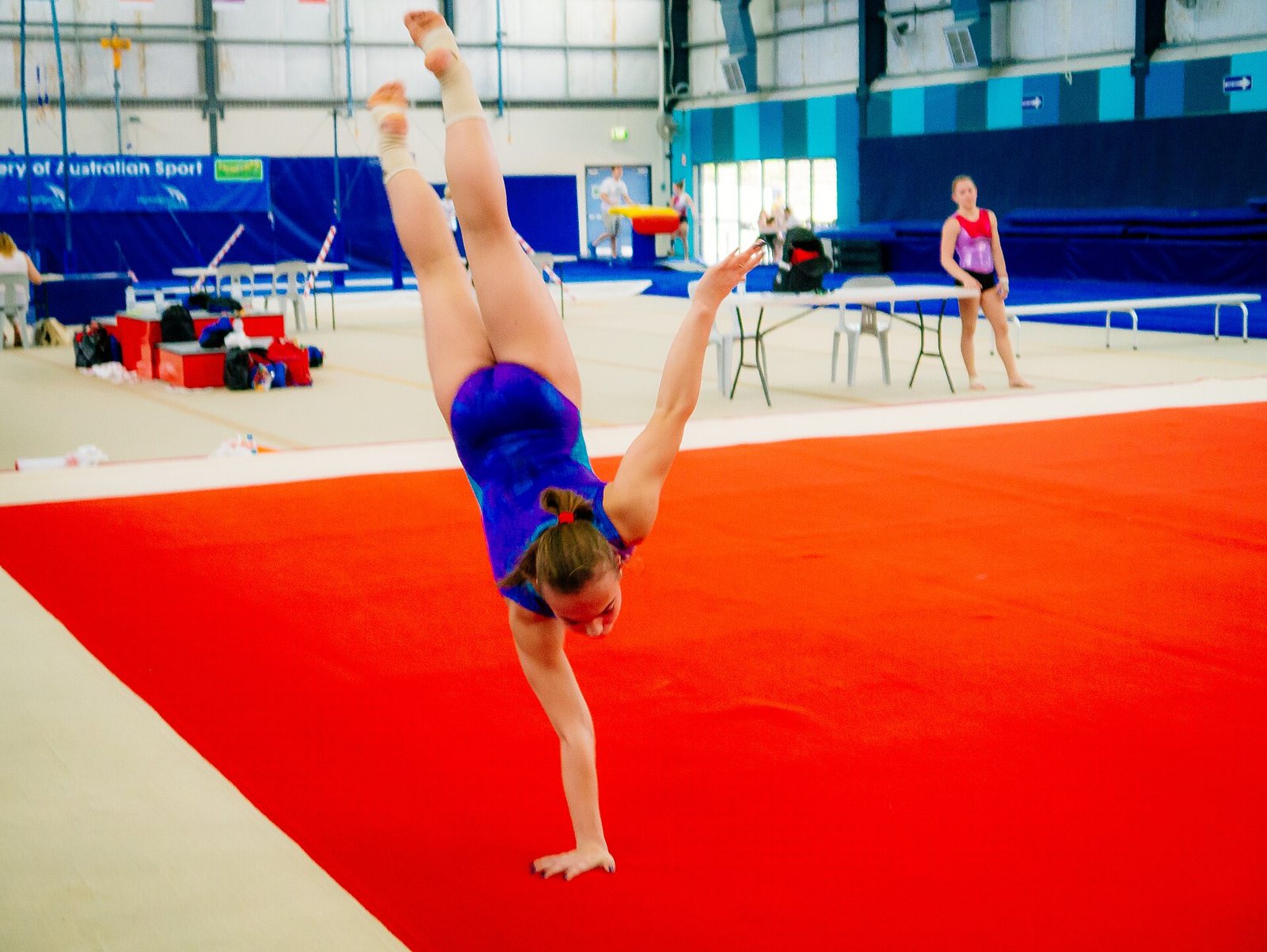
Gymnastics and apparatus: progression, spotting and safety
The mat, rolls, handstands and the cartwheel, rings, the horizontal bar, the vault box and the trampoline, safe progression, spotting, and working in stations.
- 57 min
Parkour and movement courses
The history of parkour and its benefits, the basic vaults step by step, designing courses in the gym and the yard, and managing risk and choosing the right challenge.
- 62 min
Rhythm, dance and movement to music
Why movement to music, beat, tempo, phrases and song structure, choosing music, warm-ups, exercises and group dances, and cultural sensitivities in the region.
Module 4: Games and sports
- 72 min
Teaching ball games: classification and tactical principles
Classifying games (invasion, net, striking and fielding, and target), shared principles, teaching games for understanding, modified small-sided games, and football and handball at school.
- 62 min
Basketball at school
The history of the game and its basic rules, dribbling, passing, receiving and shooting, the principles of attack and defence, adapting the game for different classes, and a model lesson.
- 62 min
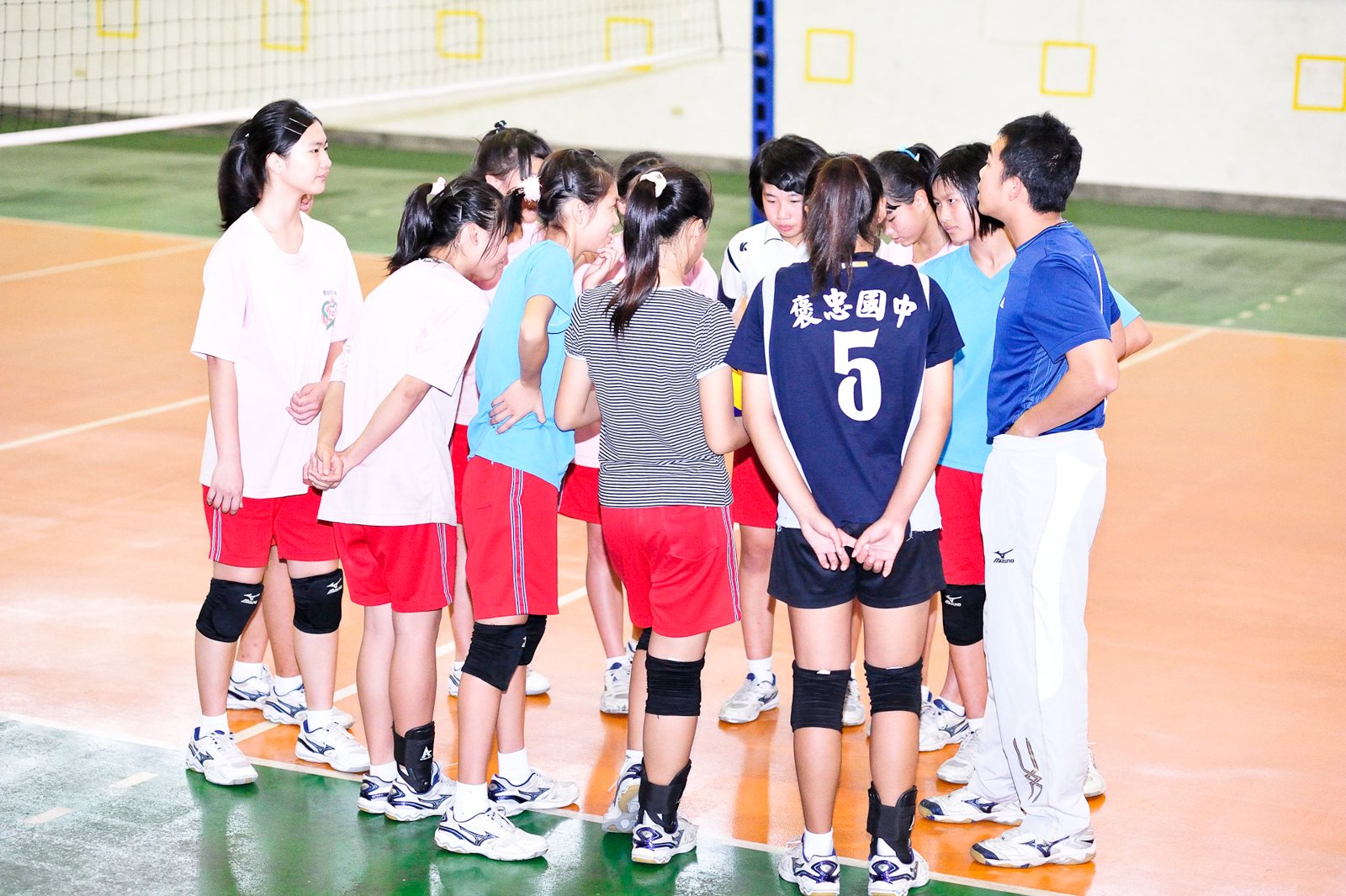
Volleyball and badminton
Volleyball rules, rotation and shots, badminton grips, serves and strokes, adapting games for beginners, and two model lessons.
- 62 min
School athletics: running, jumping and throwing
Sprints, relays and distance running, the long jump and the high jump, throwing the ball and a light shot, safety in throwing, and organising a sports day.
Module 5: Fitness and nutrition
- 72 min
Fitness, endurance and training methods
Oxygen uptake, heart rate and intensity zones, continuous and interval training methods, fitness training for school ages through games, and endurance tests.
- 72 min
Strength training for children and teenagers, safely
What science says about strength in young people, exercises with body weight, equipment and machines, technique, reps and sets, circuit training, and safety in the school gym.
- 57 min
Coordination, flexibility and balance
Neuromuscular coordination and how to train it, muscle memory, flexibility and the types and rules of stretching, balance, and the dynamic warm-up.
- 67 min
Nutrition and health for students
Energy sources and nutrients, the balanced plate, water and heat, meals before and after sport, sugar and drinks, nutrition in Ramadan, and the teacher’s role and its limits.
Module 6: Training, mental health and the body
- 62 min
Training planning: principles, goals and the training log
The benefits of physical activity, training principles, SMART goals, fitness tests, the training log, and teaching students to plan for themselves for life.
- 62 min
Mental training, stress and sleep in teenagers
Stress in students, mental training and focus, breathing and relaxation, sleep, screens, and the role of physical education in mental health.
- 62 min
Body image, eating disorders and doping
Body ideals and social media, comments about bodies, eating disorders, their signs and referral, doping and its rules, and building a healthy view of the body.
- 57 min
Sport, gender and equity
Equal opportunities, stereotypes, the history of women’s sport, girls in sport in the Arab region, mixed and single-sex lessons, and the teacher’s language.
Module 7: Water and the outdoors
- 72 min
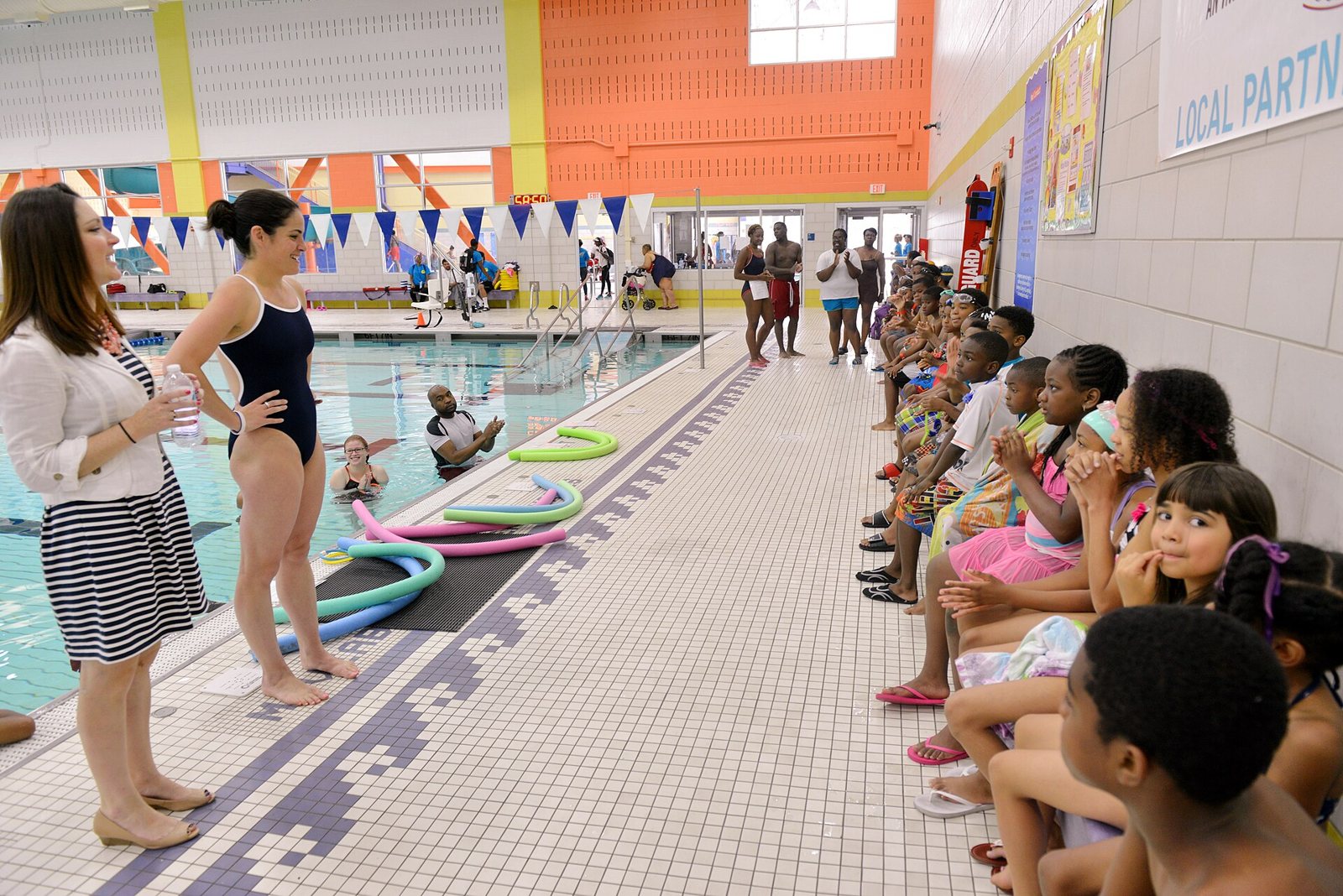
Swimming and teaching it at school
What it means to be able to swim, floating and body position, breaststroke, backstroke, freestyle and butterfly, entries and diving, swimming in clothes, and progressions for beginners.
- 62 min
Water safety and rescue
Facts about drowning, safety in the pool and the sea, safe rescue from the side, the distress signal, supervising school swimming, and CPR after drowning.
- 72 min
Outdoor life: orienteering, the map and the compass
The value of nature, the map with its symbols and scale, the compass, orienting the map, and the school orienteering course from the yard to the park to the wild.
- 62 min
Camping and outdoor activities in the Arab region
Planning the trip, clothing and equipment, shelter, fire, food and water, heat, the desert and the sun, the right of access and respect for nature, and managing risk.
Module 8: Safety, assessment and leadership
- 62 min
Sports injuries at school and how to prevent them
Types of acute and overuse injuries, first aid for sprains and bruises, concussion, risk factors, the preventive warm-up, and returning to activity.
- 67 min
First aid and CPR at school
The order of action, CPR for adults and children, the defibrillator, choking, bleeding, severe allergy, asthma and diabetes, heat, and the school emergency plan.
- 77 min
Assessment, feedback and reports
Formative and summative assessment, clear assessment criteria, observation and checklists, fitness tests and interpreting them wisely, self- and peer assessment, and writing reports for parents.
- 72 min
The teacher as leader: school activities, professional development and the graduation project
Daily physical activity at school, sports days and tournaments, partnerships, reflection and professional development, then an explanation of the graduation project.
- 4 hours (approx.)
Graduation project
“The professional teacher’s portfolio”: a complete unit of six to eight lessons for a class at an international school, in eight parts: the class and the curriculum, objectives and criteria, the unit plan, three detailed lessons, differentiation and inclusion, assessment, safety and first aid, and health, communication and reflection. Assessed by the smart tutor; the pass mark is 60.
- 90 min
Final exam
Sixty questions, ten of them on two practical cases: a basketball unit for a mixed class, and an overnight desert trip. Get forty-two right and your diploma is issued.
A teacher who plans, includes, assesses and protects
At an international school, one class has ten nationalities, languages and abilities, plus heat, fasting and the varied expectations of families. This diploma brings together what you need to teach there with confidence, in practical language and with examples from schools in the region.
- The curriculum: The three areas of the European curriculum, the four IB criteria, the British curriculum and Cambridge, and backward design, the unit and the lesson.
- Teaching: The spectrum of styles, teaching games for understanding, the sport education model, class management, and inclusion and differentiation.
- Content: Fundamental movements, gymnastics, parkour and dance, ball games and athletics, fitness, strength and coordination, and swimming, orienteering and camping.
- Health and safety: Nutrition, mental training and sleep, body image and doping, equity, injuries, first aid and CPR, and assessment and reports.
Who this diploma is for
- Physical education teachers at international and private schools.
- Physical education and sports science graduates who want to work at an international school.
- State school teachers moving to an international curriculum.
- Heads of physical education departments and coaches who work with schools.
What you get
- 32 videos that explain each unit with examples and diagrams.
- 32 A ready-to-use practical tool: the unit and lesson plan, station cards, the inclusion plan, the rating scale, the trip risk assessment, the gym checklist, the emergency plan and more.
- A PDF trainee guide, and a smart tutor that answers from the text of the unit you are studying.
- A graduation project assessed by the smart tutor against published criteria.
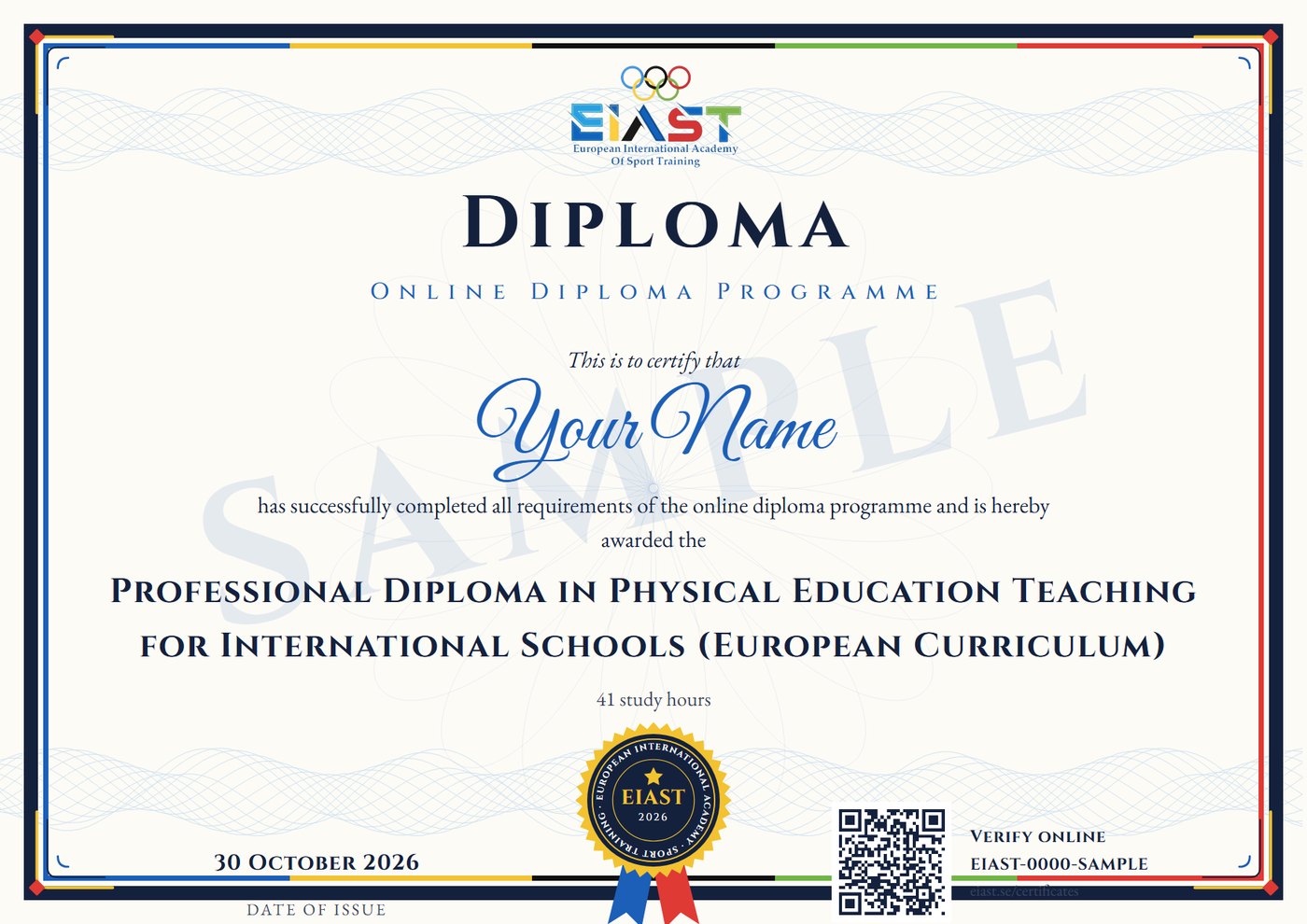
- A diploma document with a verification number, issued when you pass the project and the final exam.
Your diploma when you pass
Pass the graduation project and the final exam, and your diploma is issued at once in your name, ready to print or save as a PDF.
- A Diploma document in English, in A4 size.
- A verification number of its own, and a QR code that opens the verification page on eiast.se.
- Your study hours, your graduation project mark and your final exam result.
- It stays valid and any organisation can verify it at any time. It is a diploma from the academy, not a university degree or a licence to teach from a government body.
 View the sample at full size
Start the course today
Buy the course once and unit one opens. Each unit opens the next, then the graduation project and the final exam, and your diploma is issued as soon as you pass.